



 Visit our Showsite
Container Gardening: How to Style Garden Planters
Summary: Mastering the Art of Container Gardening
- Material Integrity: Why pressure-treated, slow-grown timber is essential for longevity and rot prevention in the UK climate.
- Strategic Depth: Understanding soil volume requirements for deep-rooted vegetables versus shallow-rooting herbs.
- Vertical Innovation: Utilising vertical space to maximise yield and aesthetics in compact urban gardens.
The Science and Style of Garden Planters
Container gardening is more than just a trend; it is a sophisticated landscaping method that gives you complete control over soil conditions, sun exposure, and garden architecture. Whether you have a sprawling lawn or a compact courtyard, strategically placed garden planters can transform a mundane space into a thriving horticultural haven.
However, before we discuss aesthetics, we must address the "Science of the Build." Not all timber is created equal. At elbec garden buildings, we prioritise slow-grown timber. Slow-grown timber has a tighter grain structure than fast-grown timber, making it denser and significantly more resistant to warping and splitting. When you combine this natural durability with high-quality pressure treatment, where preservatives are forced deep into the wood fibres under vacuum, you get a product capable of withstanding the damp UK climate for over a decade.
Wooden vs. Metal Planters: Which is Better?
While metal planters offer a sleek, industrial aesthetic, they present challenges for plant health. Metal is highly conductive, meaning it heats up rapidly in summer, potentially scorching delicate roots, and offers zero insulation in winter. Timber, conversely, is a natural insulator. It maintains a more consistent soil temperature, protecting root systems from sudden temperature spikes and drops. Aesthetically, timber softens the landscape, whereas metal can sometimes look harsh against soft planting.
How to Choose the Right Garden Planter
Selecting the perfect planter involves balancing three key factors: location, crop, and durability.
- Assess your space: Is it a windy balcony? You'll need a heavy, wide-based planter to prevent tipping. Is it a small courtyard? Look for vertical solutions to maximise footprint.
- Consider the crop: Deep-rooted vegetables require a large volume of soil, while bedding plants thrive in shallow troughs.
- Prioritise longevity: Cheap softwoods rot quickly; investing in pressure-treated, slow-grown timber ensures your garden feature lasts for years rather than a single season.
What Size Planter Do I Need?
Size is not just about physical dimensions; it is about soil volume. Small pots dry out incredibly fast in summer, requiring daily watering. Larger planters act as a buffer, retaining moisture for longer.
- Small (under 30cm depth): Ideal for herbs, lettuce, strawberries, and bedding flowers.
- Medium (30-45cm depth): Perfect for peppers, chillies, bush tomatoes, and small shrubs.
- Large/Deep (45cm+ depth): Essential for root vegetables like carrots, potatoes, and perennials that need more space.
Designing a Container Garden for Vegetables
Creating a productive container garden for vegetables requires more than dropping seeds into soil; it requires an understanding of root depth and drainage. Standard pots often fail because they lack sufficient volume to support crops such as parsnips, carrots, or potatoes.
To ensure success, you need planters engineered for airflow and drainage. Stagnant water at the bottom of a planter leads to root rot, the silent killer of garden crops. Our range of wooden planters is designed with adequate elevation and drainage gaps to ensure your soil remains aerated. Furthermore, timber's thermal properties provide better insulation for roots against frost than thin plastic or conductive metal, extending your growing season well into autumn.
Do Planters Need Drainage?
Absolutely. Without drainage, water pools at the bottom of the container, displacing oxygen and causing roots to rot. While some decorative pots come without holes (intended for use as cover pots), any planter intended for direct planting must have drainage holes or slats.
We recommend adding a layer of gravel, stones, or broken pottery (crocks) at the base of your planter before adding compost. This aids water movement and prevents drainage holes from becoming clogged with compacted soil over time.
Container Gardening Ideas for Aesthetics and Utility
When styling your garden, think in layers. Container gardening ideas often focus on the "Thriller, Filler, Spiller" concept, but the vessel itself is just as important as the plants.
- Create Levels: Use tiered planters to draw the eye upward and make harvesting easier.
- Zone Your Garden: Use long, trough-style planters to create natural partitions between dining areas and play zones.
- Texture Contrast: The rough-sawn texture of a rustic herb garden planter provides a beautiful contrast against smooth patio stones or modern decking.
If you are looking to revitalise your garden this season, be sure to check our latest Spring Offers to find high-quality timber products at exceptional value.
For a comprehensive look at our full range of durable timber vessels, browse our dedicated planters section.
Expert Product Recommendations
Below, we analyse five distinct planters from our collection, evaluating their construction quality, utility, and aesthetic contribution to your garden.
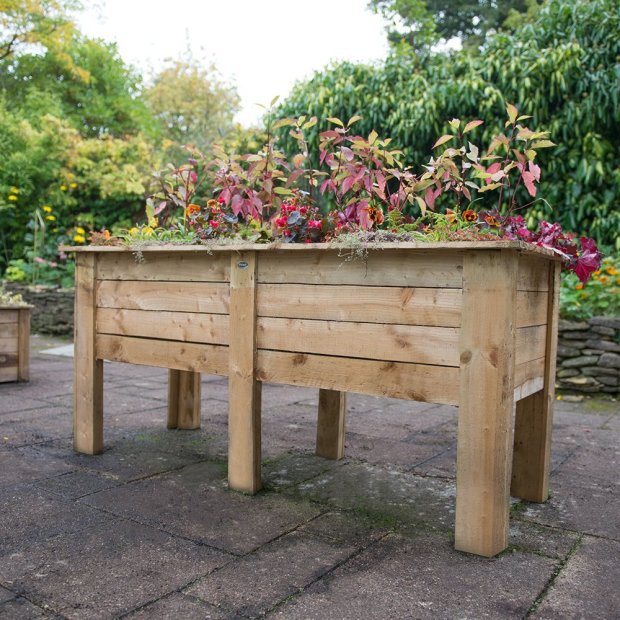
Forest Deep Root Planter
The Forest Deep Root Planter is the definitive solution for serious vegetable gardeners who require substantial soil depth without compromising on floor space.
- The Science of the Build: This planter is constructed from sustainably certified timber that has been pressure-treated, providing an impressive 15-year anti-rot guarantee. The sheer depth of the trough allows for the cultivation of long-root vegetables that would be stunted in standard containers.
- Practical Utility: Standing on sturdy legs, this planter is raised off the ground. This isn't just for airflow; it creates an ergonomic working height that reduces back strain during weeding and planting.
- Aesthetic & Design: The clean lines and substantial 6ft length make it an excellent choice for lining the edge of a patio or breaking up a large expanse of fencing.
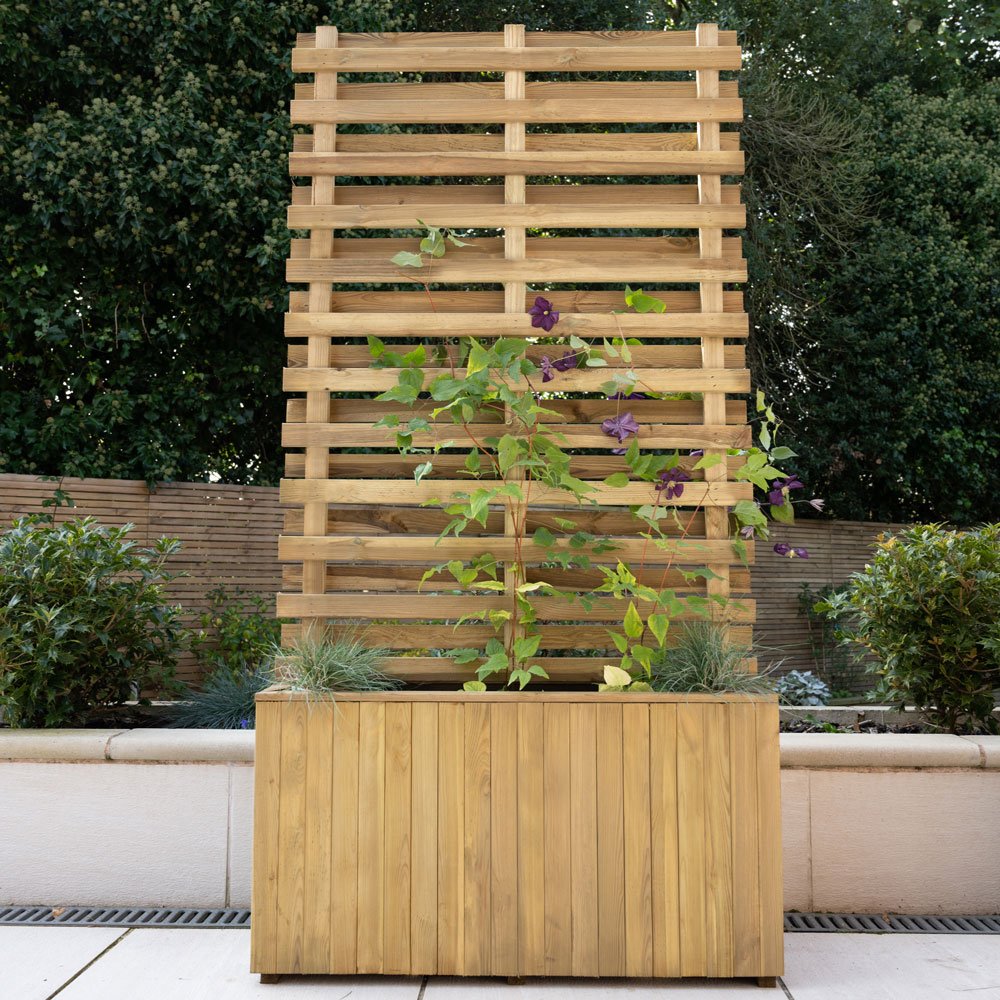
Forest Wooden Garden Living Wall Planter
For those with a limited footprint but high ambition, the Forest Wooden Garden Living Wall Planter revolutionises how we utilise vertical space.
- The Science of the Build: The back panel features strong horizontal slats designed to support hanging pots or shelves. The timber is pressure-treated to prevent fungal decay from constant contact with watered hanging baskets.
- Practical Utility: This is the ultimate space-saver. It combines a generous base trough for bedding plants with a 1.2-metre high trellis-style back. It is perfect for creating a "green screen" to hide unsightly bins or provide privacy from neighbours.
- Aesthetic & Design: This unit offers a contemporary, architectural look. By growing upwards, you add texture and colour at eye level, making your garden feel more immersive and secluded.
Forest Large Kitchen Garden Planter
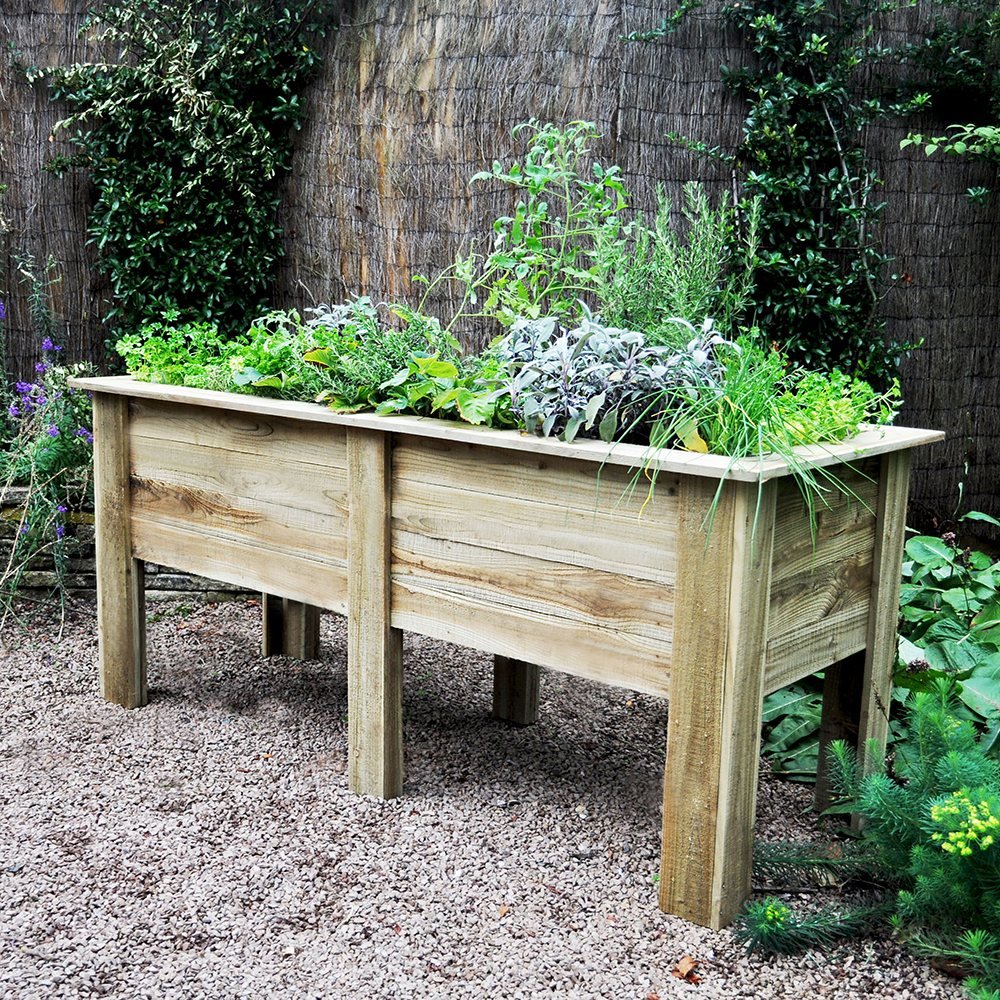
If self-sufficiency is your goal, the Forest Large Kitchen Garden Planter offers the capacity of a traditional allotment bed within a contained, manageable structure.
- The Science of the Build: Holding approximately 250 litres of soil, this planter is built to withstand significant internal pressure. The cross-beams used in its construction ensure the sides remain rigid and do not bow over time under the weight of wet soil.
- Practical Utility: The raised height creates a barrier against common garden pests like slugs and rabbits. At the same time, the unique shape allows you to reach the centre of the bed from any side without stepping on the soil, preventing soil compaction.
- Aesthetic & Design: Its rustic, substantial appearance acts as a focal point. It looks particularly striking when planted with a mixture of edible crops and companion flowers, such as marigolds, blending utility with ornamental beauty.
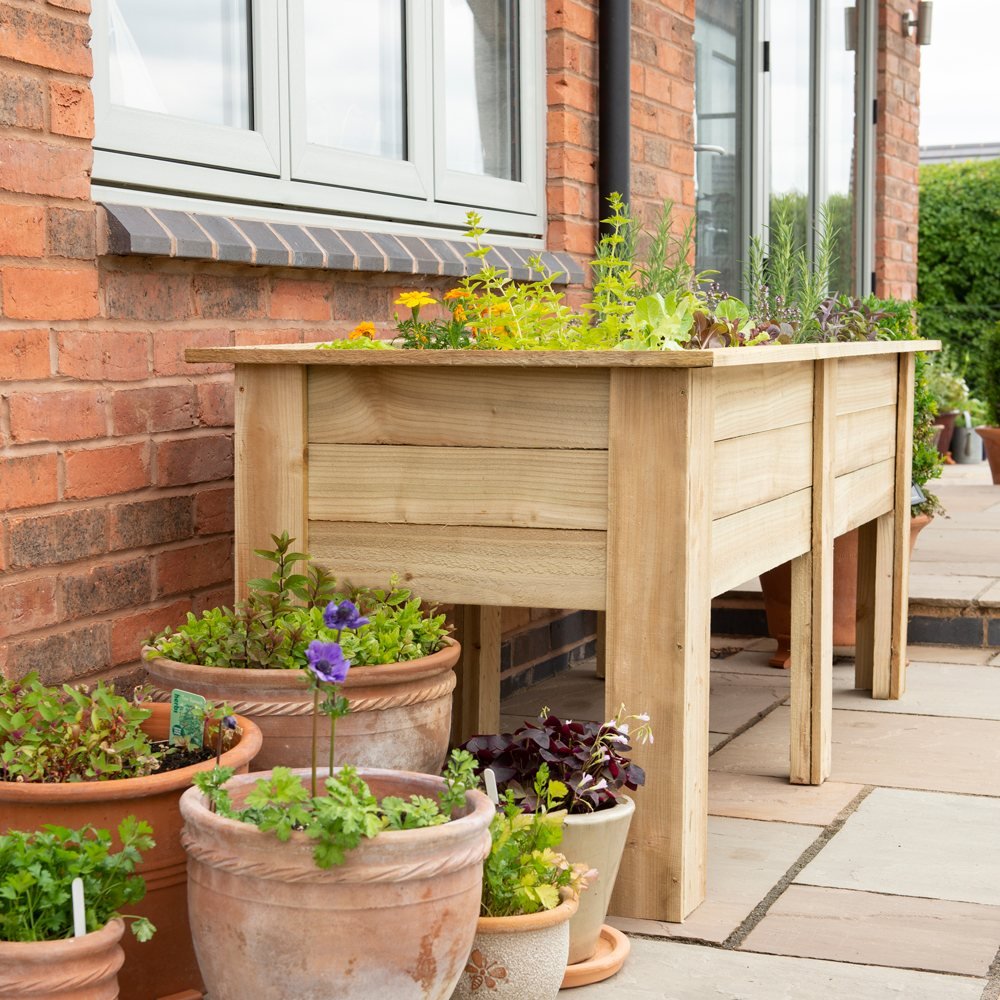
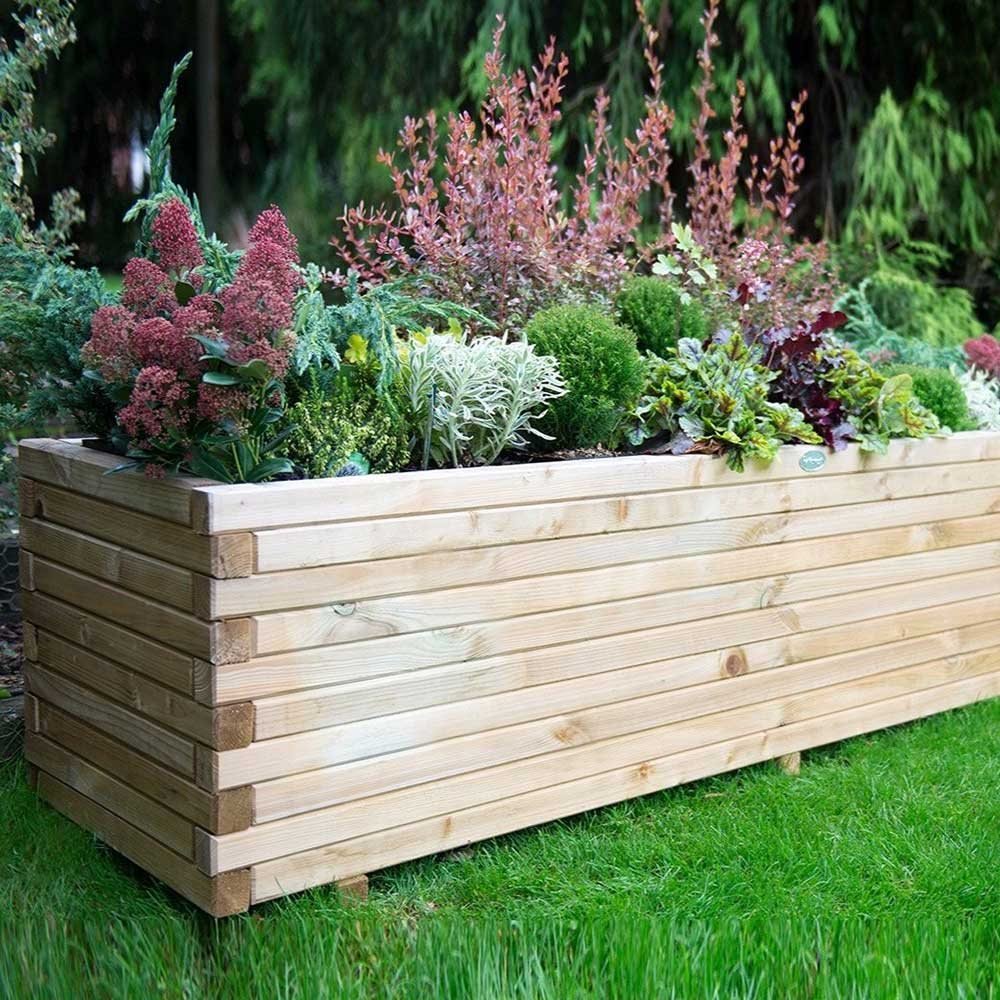
Forest Lomello Planter
Prioritising modern design trends, the Forest Lomello Planter brings a sleek, designer touch to any patio or decking area.
- The Science of the Build: Despite its delicate woven appearance, the Lomello is robust. The horizontal weave is framed by thick, planed timber edges, ensuring structural integrity while maintaining the 15-year anti-rot guarantee.
- Practical Utility: This planter features a pre-lined interior, which is crucial for moisture retention and to protect the timber from direct soil contact. It is perfectly sized for ornamental shrubs or a compact herb garden.
- Aesthetic & Design: The contemporary horizontal weave mirrors modern fencing trends. It captures light and shadow beautifully throughout the day, adding visual depth to your garden corners.
Forest Caledonian Tiered Raised Bed
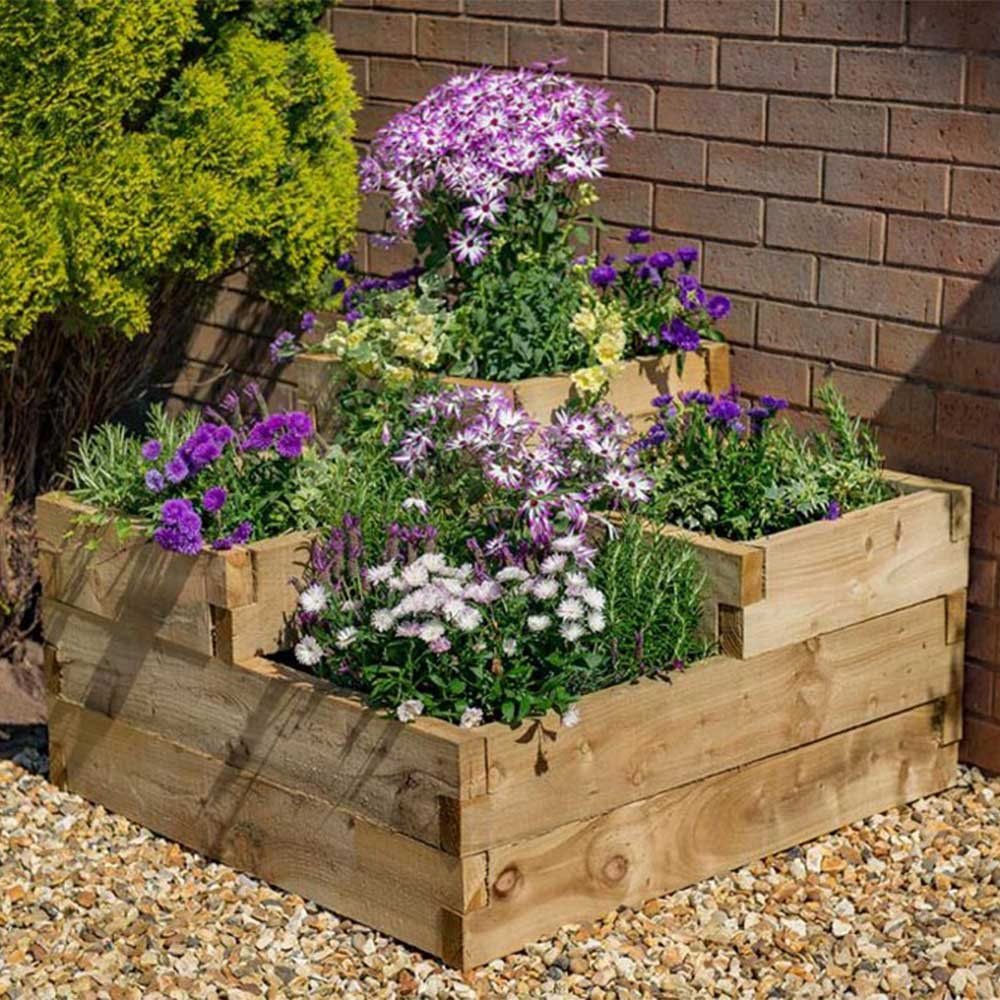
The Forest Caledonian Tiered Raised Bed eliminates the monotony of flat planting by introducing immediate height and structure.
- The Science of the Build: This planter utilises heavy-duty timber sections with a tongue-and-groove appearance. The stepped design is engineered to be self-supporting, providing three distinct planting zones within a single solid footprint.
- Practical Utility: The tiered system is ideal for separating plants with different water or light requirements. You could, for example, plant sun-loving Mediterranean herbs in the top tier and moisture-loving ferns in the lower, shaded tier.
- Aesthetic & Design: This is a display piece. It allows you to create a "waterfall" of flowers. It is particularly effective for trailing plants (spillers), which can drape over the edges of the upper tiers, softening the wood and creating a lush, abundant look.
FAQ About Garden Planters
Do garden planters need lining?
Yes, lining a wooden planter is highly recommended. A permeable liner retains moisture for the plants while allowing excess water to drain away. Crucially, it creates a barrier between the soil and the timber, further extending the wood's life.
Can you put a planter directly on patio slabs?
You can, but it is better to raise it slightly. Placing a planter directly on slabs can trap moisture beneath it, potentially staining the patio and causing the planter's bottom to rot. Using "pot feet" or selecting a planter with integral legs ensures good airflow and drainage.
How deep should a planter be for vegetables?
Salad leaves and herbs need very little depth (15-20cm). However, for root vegetables like carrots or potatoes, you need significant depth, at least 45-60cm, to allow the roots to develop fully without hitting the bottom.
Are wooden planters better than plastic?
Wooden planters are generally superior for plant health due to better insulation and breathability. While plastic helps retain moisture, it can "cook" roots in hot weather and often becomes brittle and cracks after a few seasons of UV exposure. Wood is also a sustainable, biodegradable choice.
Do raised planters need a base?
This depends on the surface. If placed on soil or grass, a base is not strictly necessary (and being open to the ground allows worms to enter). However, if placed on a patio, decking, or balcony, a solid base with drainage is essential to contain the soil.
Final Thoughts on Garden Styling
Choosing the right planter is an investment in your garden's future. By selecting high-quality, pressure-treated timber, you ensure your garden remains beautiful and productive for years to come. Whether you are growing a salad crop in a deep-root planter or creating a privacy screen with a living wall, the quality of the build determines the success of the garden.
Need help choosing the right building? Call our expert team on 0115 965 9900, contact us here, or visit our showsite to see the quality for yourself.
-
Posted by Marilyn Elliott
19th February 2026